


Site-level safety leadership is the single most critical factor in preventing occupational injuries and operational downtimes. While corporate executives establish safety policies and risk management frameworks, the frontline execution of these protocols rests squarely on the shoulders of the safety trained supervisor. Across high-risk sectors such as civil construction, petrochemical refining, heavy manufacturing, and logistics, supervisors act as the direct bridge between regulatory mandates and daily worker safety.
A safety trained supervisor is an operational leader who possesses verified competence in hazard identification, risk assessment, incident investigation, and emergency response. Rather than viewing safety as an administrative burden, effective supervisors embed proactive hazard controls directly into daily workflows, ensuring that project deadlines are met without compromising crew health or site compliance.
At PEEB Certification, we recognize that frontline leaders require clear, standardized evaluation of their operational capabilities. Transitioning from a basic trade worker or site foreman into a recognized safety leader requires more than informal experience; it demands formal validation under internationally benchmarked standards such as the Certified Safety Specialist framework.
What You Will Learn
-
The primary operational responsibilities of a safety trained supervisor across construction and industrial environments.
-
How frontline supervisors bridge the gap between corporate management systems and field-level worker safety.
-
The core technical competencies required for effective hazard identification and job safety analysis.
-
Answers to common Google queries regarding supervisory safety qualifications and career growth.
-
How earning accredited credentials elevates frontline supervisors into executive HSE roles.
Core Responsibilities of a Safety Trained Supervisor
The daily duties of a frontline safety leader extend far beyond conducting basic morning toolbox meetings. A safety trained supervisor maintains continuous oversight of working conditions, equipment operation, and personnel behaviors to ensure that established safety management systems are actively followed.
1. Job Safety Analysis (JSA) and Hazard Identification
Before any high-risk work commences, the supervisor must break down the operational task into discrete steps, identify potential physical and environmental hazards at each phase, and establish mandatory control measures. This process ensures that workers understand the specific risks associated with activities like working at heights, confined space entry, or heavy lifting operations.
2. Incident Investigation and Root Cause Analysis
When an near-miss or injury occurs, a safety trained supervisor conducts an immediate, objective investigation. Rather than focusing on placing blame, the supervisor utilizes structured methodologies such as the 5 Whys or Fishbone diagrams to identify systemic failures, equipment defects, or procedural gaps, ensuring that corrective actions prevent future recurrences.
3. Regulatory Compliance and Enforcement
Frontline supervisors are responsible for enforcing local labor regulations and international standards set by bodies like the Occupational Safety and Health Administration (OSHA). This includes verifying that personal protective equipment (PPE) is properly selected and worn, machinery guards remain intact, and permit-to-work systems are strictly maintained.
Bridging the Gap Between Corporate Policy and Field Execution
One of the greatest challenges in organizational health and safety is the disconnect between boardroom strategy and jobsite reality. Corporate safety manuals often outline complex safety programs that look ideal on paper but prove difficult to execute under demanding field conditions.
A skilled safety trained supervisor translates high-level corporate expectations into practical, step-by-step instructions that workers can execute safely under tight deadlines. By fostering open communication and encouraging crew members to report hazards without fear of reprisal, supervisors build a culture where safety is viewed as a shared operational value rather than a punitive enforcement tool.
Furthermore, supervisors who complement their field experience with advanced auditing credentials, such as an ISO 45001 Lead Auditor qualification, gain the systemic perspective needed to evaluate whether site protocols align with international occupational health and safety standards.
Q&A: Answering Common Supervisory Safety Questions
“What qualifications are required to become a safety trained supervisor?”
While background requirements vary by industry, most safety trained supervisors begin with several years of hands-on technical or trade experience. From there, candidates must complete formal safety training covering hazard recognition, emergency response, and OSHA compliance, followed by independent evaluation through recognized credentialing bodies.
“How does a safety trained supervisor differ from a dedicated safety officer?”
A safety officer typically functions as an advisor and compliance specialist responsible for monitoring overall site conditions, writing safety plans, and maintaining safety documentation. In contrast, a safety trained supervisor directly manages workers, oversees production outputs, and holds direct responsibility for ensuring that work is conducted safely in real-time.
“Can a safety trained supervisor conduct internal safety audits?”
Yes. Supervisors who have undergone structured training in audit methodologies can perform daily and weekly site inspections. To lead formal organizational audits or evaluate management systems, supervisors often pursue specialized certifications such as the ISO 9001 Lead Auditor or ISO 14001 Lead Auditor credentials.
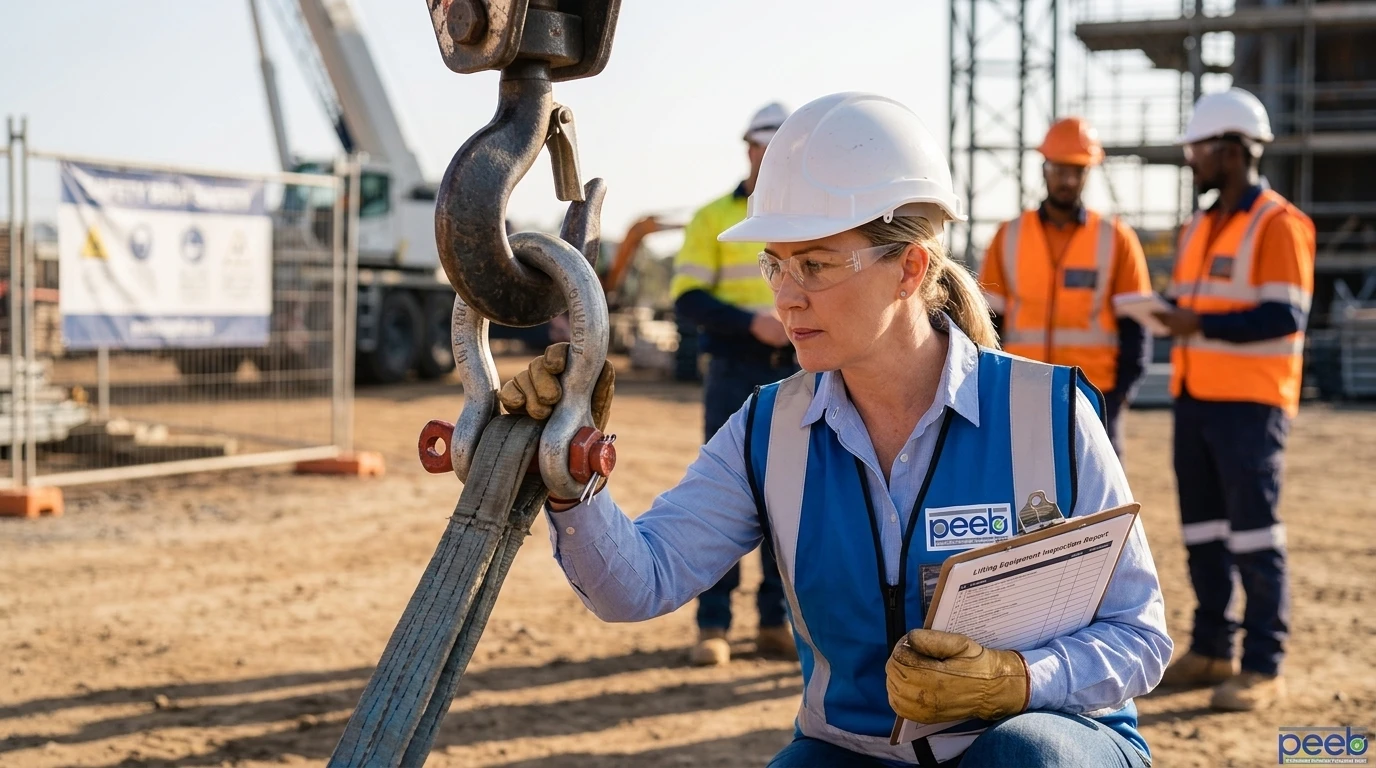
A certified supervisor inspecting heavy rigging and lifting equipment to ensure site compliance.
Advancing from Supervisory Roles to HSE Management
For ambitious professionals, serving as a safety trained supervisor is one of the most effective stepping stones toward executive safety management. The practical experience gained on the front lines provides invaluable insights into human behavior, operational bottlenecks, and risk control reality.
To transition from supervisory roles into management positions such as HSE Director or Compliance Manager, professionals should formalize their qualifications through accredited personnel certifications:
-
Validate Core Competencies: Enroll in the Certified Safety Specialist program to prove mastery over advanced risk assessment, legal compliance, and organizational safety leadership.
-
Master Technical Inspections: For those overseeing heavy machinery and lifting operations, completing the Certified Lifting Inspector pathway provides specialized authority in equipment integrity.
-
Verify Your Credentials: Utilize the official PEEB certificate verification portal to present authenticated, third-party verified credentials to international employers and regulatory bodies.
Conclusion: Driving Safety Excellence from the Ground Up
The role of the safety trained supervisor is indispensable to modern industrial success. By combining technical expertise with genuine leadership, supervisors protect worker health, safeguard company assets, and ensure full regulatory compliance. As industries adopt increasingly complex technologies and tighter safety standards, investing in accredited supervisory credentials remains the surest path to professional growth and operational excellence. Explore PEEB’s full range of accredited certifications today to take the next step in your career.
